Expert Tibial Nail Instrument Set – Complete Expert Tibia Nail (ETN) Instrument System

Precision-Engineered Multi-Planar Targeting, Patellofemoral-Protected Canal Entry, and Active Axial Compression Instrumentation for Proximal, Diaphyseal, and Distal Tibial Osteosynthesis.

Engineered for high-volume hospital trauma centers, orthopedic specialty clinics, and global implant distributors, our Expert Tibial Nail Instrument Set provides uncompromising targeting accuracy across the entire length of the tibia. Developed by a specialized Expert Tibial Nail Instrument Set Manufacturer, this comprehensive Expert Tibia Nail (ETN) Instrument System consolidates semi-extended suprapatellar entry, traditional infrapatellar access, and multi-planar proximal/distal interlocking into a single, color-coded sterile platform.

  • Dual-Portal Surgical Access: Configured as an all-in-one Suprapatellar and Infrapatellar Expert Tibial Nailing Set, equipping surgeons with dedicated patellofemoral protection sleeves for semi-extended knee positioning alongside classic infrapatellar tissue guides.
  • 5-Option Proximal & 4-Option Distal Targeting: Functions as a high-precision Multi-Directional Locking Tibial Nail Instrument Set, supporting three proximal cancellous locking trajectories (two oblique and one AP), two mediolateral (ML) cortical slots, and up to four bi-planar/oblique distal locking options.
  • Radiolucent Targeting Bow: Ensures unobstructed anteroposterior and lateral C-arm fluoroscopy views while maintaining zero mechanical deflection during multi-planar drilling.
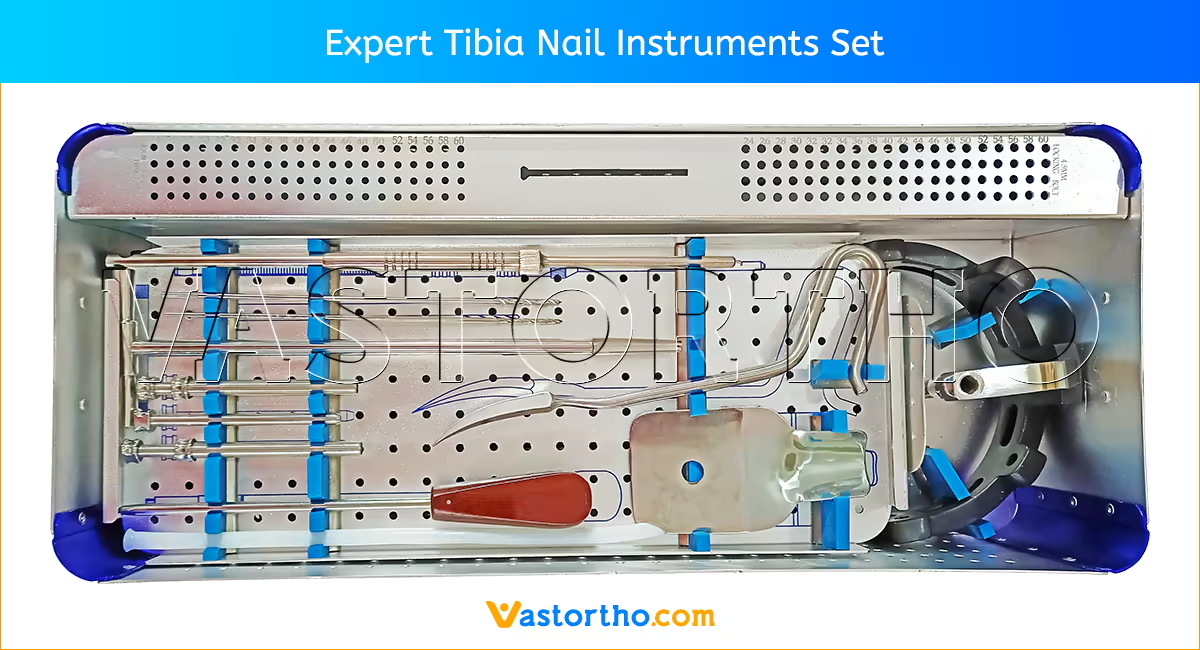
expert tibial nail instrument set hero

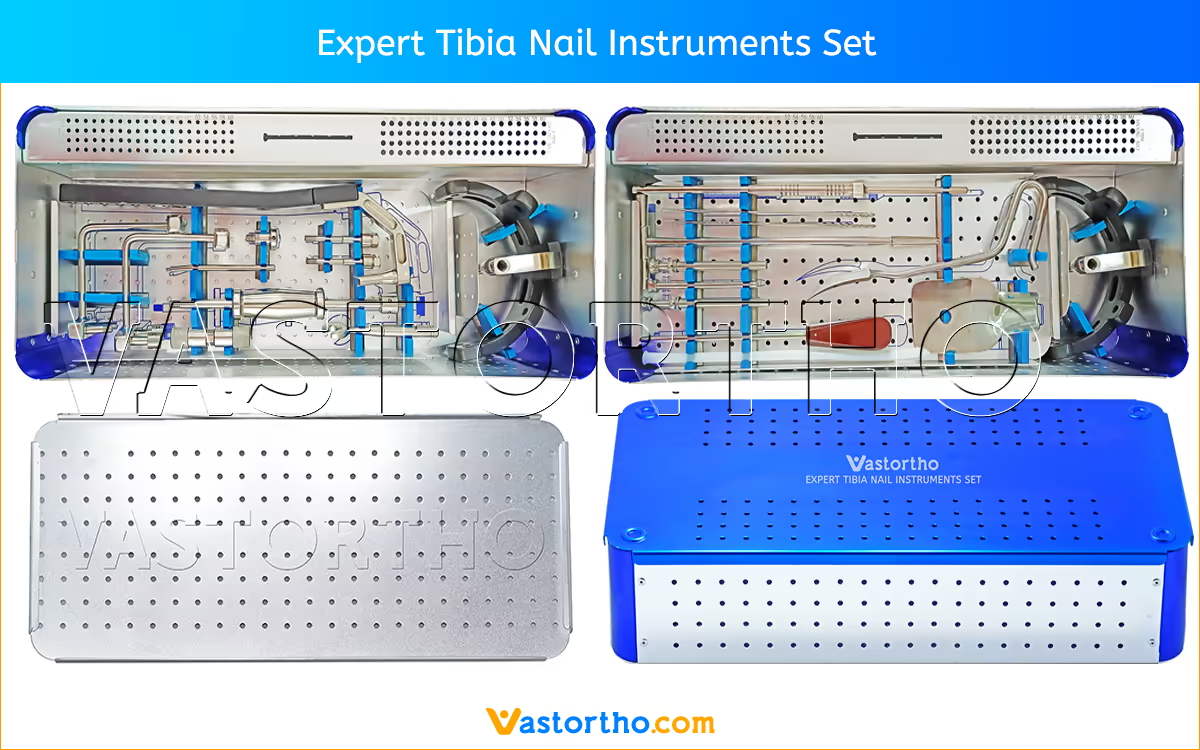
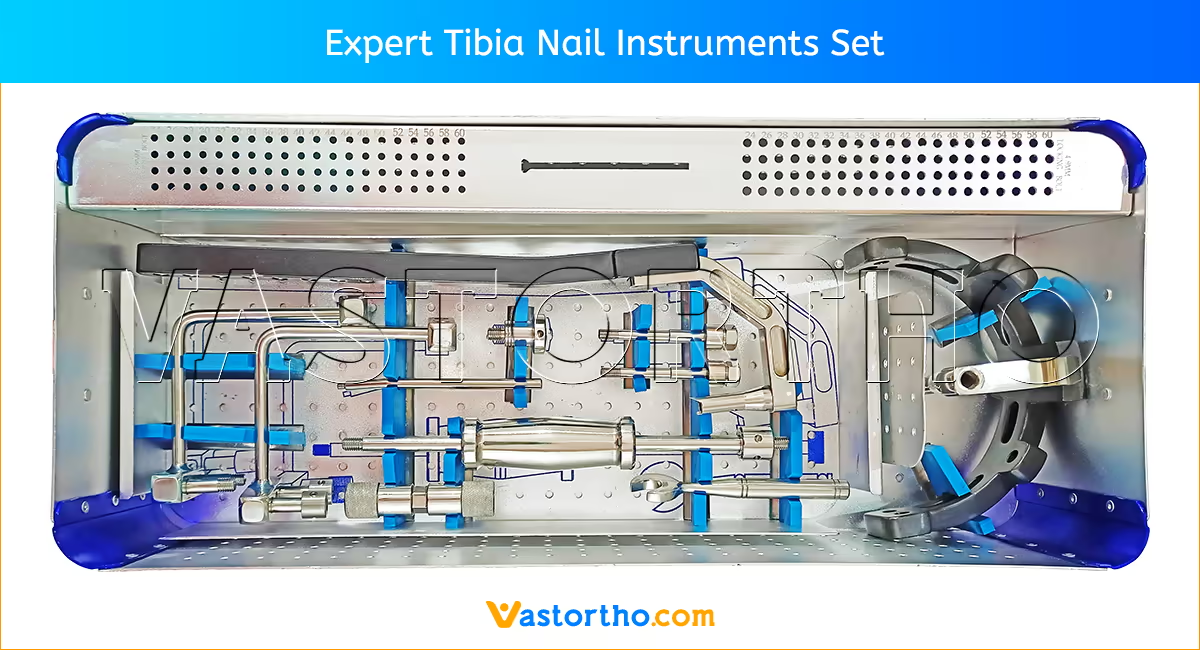
Standard Set Configuration – Expert Tibial Nail Instrument Set

Below is the standard factory Bill of Materials for the Expert Tibial Nail Instrument Set. Flexible medullary reamer sets and custom OEM configurations are available upon request.

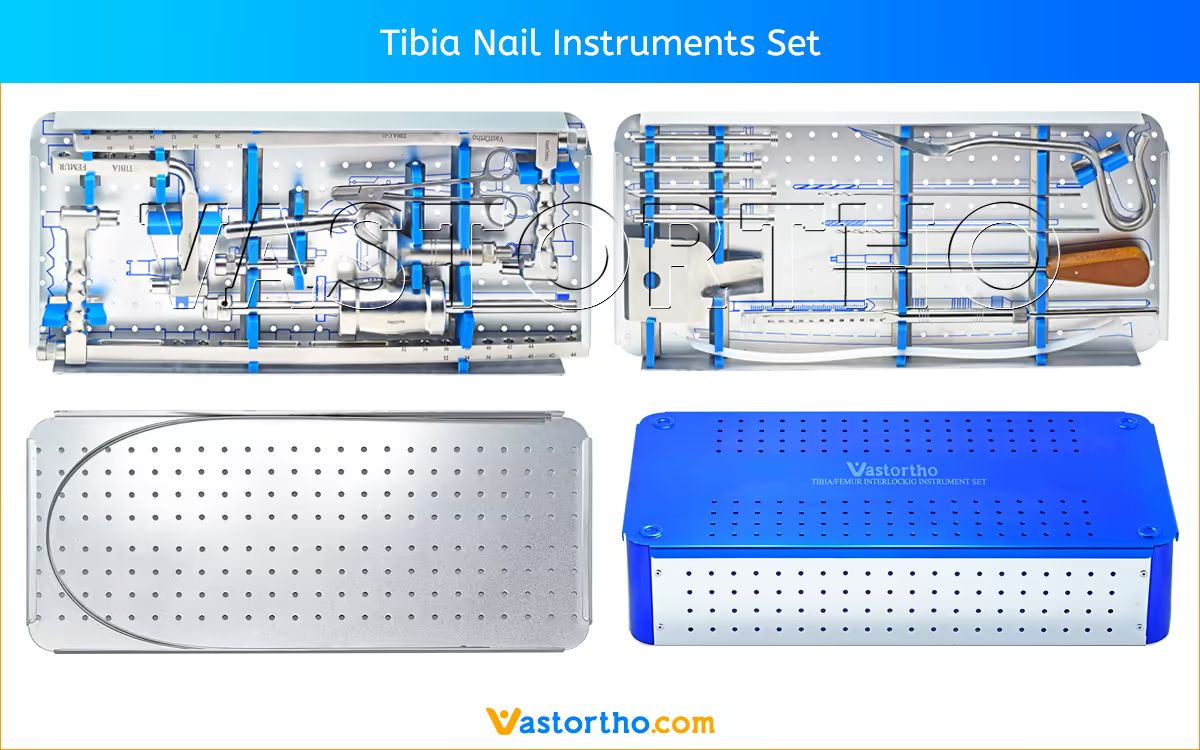
  • Depth Gauge for Locking Screws, measuring range up to 110 mm : 1 Qty
  • Drill Bit 3.2 x 250 mm : 1 Qty
  • Drill Bit 4 x 250 mm : 1 Qty
  • Reamer Cannulated, T Handle : 1 Qty
  • Drill Sleeve 3.2 mm : 1 Qty
  • Protection sleeve for drill Sleeve 3.2 mm : 1 Qty
  • Trocar : 1 Qty
  • Drill Sleeve 4 mm : 1 Qty
  • Protection Sleeve for Drill Sleeve 4 mm : 1 Qty
  • Screw Driver for 3.9 mm and 4.9 mm Locking Bolt : 1 Qty
  • Bone Awl : 1 Qty
  • Tissue Protector : 1 Qty
  • Teflon Tube : 1 Qty
  • Arm for Distal Jig : 1 Qty
  • Arm for Distal Jig : 1 Qty
  • Insertion Driving Head : 1 Qty
  • Pin Wrench : 1 Qty
  • Ram and Ram Rod : 1 Qty
  • Ram Rod Handle : 1 Qty
  • Nail Holding Bolt for Expert Tibia Nail : 1 Qty
  • Nail Holding Bolt for Expert Tibia Nail : 1 Qty
  • Spanner : 1 Qty
  • Distal Jig : 1 Qty
  • Proximal Jig : 1 Qty
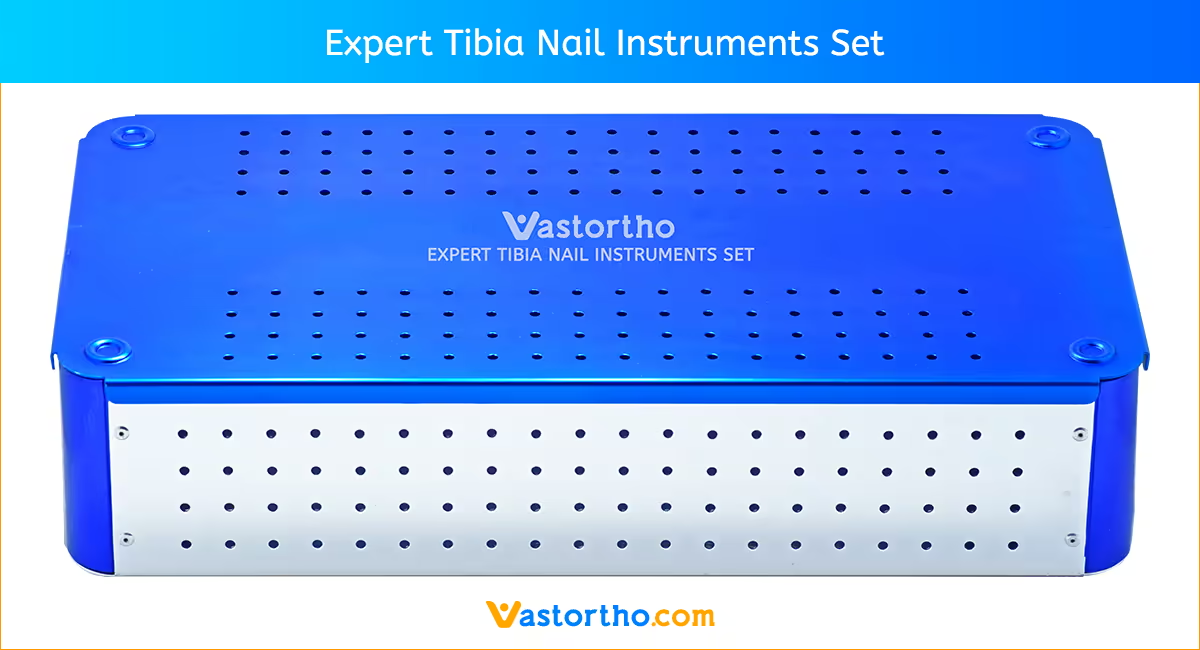
  • Graphics Aluminium Box with Silicone Fittings : 1 Qty
expert tibia nail etn instrument system jig

multi directional locking tibial nail instrument set

expert tibial nail instrument set manufacturer tray

Precision Multi-Planar Osteosynthesis: The Next-Generation Expert Tibia Nail (ETN) Instrument System

Standard intramedullary tibial nail sets are limited to mid-shaft diaphyseal fractures because parallel mediolateral locking bolts cannot prevent varus, valgus, or procurvatum toggling in wide metaphyseal bone vaults. Our Expert Tibia Nail (ETN) Instrument System overcomes this biomechanical limitation by providing rigid angular stability in ultra-short proximal and distal tibial segments.

Within this unified Expert Tibial Nail Instrument Set, the radiolucent aiming bow pairs with a snap-lock proximal oblique targeting module. This enables trauma surgeons to place two diverging proximal oblique cancellous locking screws high into the dense subchondral bone of the posteromedial and posterolateral tibial plateau, supplemented by an anteroposterior (AP) locking screw and two static/dynamic mediolateral screws—creating a fixed-angle internal fixator that resists deforming muscle forces.

Dual-Portal Surgical Versatility: Suprapatellar and Infrapatellar Expert Tibial Nailing Set

Nailing proximal third tibial fractures in hyperflexion frequently induces apex-anterior (procurvatum) malreduction due to extensor mechanism traction on the tibial tubercle. To allow reduction and nailing with the leg in a relaxed, semi-extended position on the radiolucent operating table, our platform is engineered as a complete Suprapatellar and Infrapatellar Expert Tibial Nailing Set.

  • Suprapatellar Articular Protection Assembly: Includes an anatomical outer protection sleeve, dual-diameter inner metal sleeves, and a blunt trocar that glide smoothly through the patellofemoral joint—shielding the trochlear groove and patellar cartilage during guide-pin insertion, entry reaming, and nail passage.
  • Dedicated Suprapatellar Extended Driving Mount: Features an elongated, low-profile nail connection handle and extended connecting bolt tailored to clear the superior pole of the patella without impinging on quadriceps soft tissue.
  • Classic Infrapatellar Transpatellar & Parapatellar Support: Retains the standard curved entry awl, infrapatellar protection sleeve, and short connecting bolt for surgeons utilizing traditional hyperflexed infrapatellar approaches.

Biomechanical Targeting Accuracy: Multi-Directional Locking Tibial Nail Instrument Set Engineering

Achieving interference-free screw placement across oblique and bi-planar nail holes requires rigid mechanical alignment between the aiming jig and the implant. Engineered as a zero-play Multi-Directional Locking Tibial Nail Instrument Set, the system incorporates five critical engineering features:

  • Proximal Oblique & AP Aiming Block: Guides calibrated Ø 4.3mm drills for 5.0mm dual-core locking screws along exact diverging trajectories without contacting the nail wall.
  • Active Internal Axial Compression: A calibrated internal compression bolt threads into the proximal driving mount to draw the nail and distal fracture segment proximally against a dynamic ML locking screw, closing transverse or short oblique fracture gaps under controlled mechanical compression.
  • Closed Intramedullary Reduction Finger: A cannulated, curved T-handle manipulator allows closed correction of translational and angular displacement across the fracture zone prior to ball-tip guide-wire passage.
  • Bi-Planar & Oblique Distal Freehand Targeting: Includes radiolucent distal targeting wands and calibrated Ø 3.2mm / Ø 4.2mm drill bits for placing two ML, one AP, and one distal oblique locking screw within 5mm to 22mm of the tibial plafond.
  • 3.5mm Hex Drivers: Precision-tapered screwdriver shafts securely retain locking screws and end caps from the scrub table directly into the bone cortex.

Clinical Indications Across Proximal Metaphyseal, Diaphyseal & Distal Pilon Fractures

By consolidating multi-planar metaphyseal and shaft instrumentation into one tray, hospitals and Ambulatory Surgical Centers (ASCs) can treat the entire anatomical spectrum of tibial trauma:

  • Proximal Metaphyseal Tibial Fractures (AO/OTA 41-A2 & 41-A3): Extra-articular proximal fractures and simple intra-articular plateau extensions stabilized via semi-extended suprapatellar entry and diverging proximal cancellous locking screws.
  • Diaphyseal Tibial Shaft Fractures (AO/OTA 42-A, 42-B, 42-C): Simple spiral, oblique, and transverse shaft fractures, as well as spiral/bending wedge and complex segmental fractures requiring static or dynamic axial compression.
  • Distal Metaphyseal & Pilon Fractures (AO/OTA 43-A & 43-C): Low distal third tibial fractures and simple intra-articular distal extensions stabilized using multi-planar distal locking in close proximity to the ankle joint.
  • Malunions, Nonunions & Revision Osteotomies: Secondary exchange nailing, Poller (blocking) screw-assisted deformity correction, and prophylactic tumor stabilization.

Sterile Processing & OR Workflow: Modular Expert Tibia Nail Orthopedic Instrument Tray

Hospital Sterile Processing Departments (SPD) and operating room managers require container systems that balance heavy nailing instruments across ergonomic, rapid-sterilization modules. Our Expert Tibia Nail Orthopedic Instrument Tray is constructed from hard-anodized aluminum paired with non-degrading silicone holders.

  • High-Flow Perforation Geometry: Engineered with open-surface perforation ratio to guarantee rapid steam penetration and moisture evacuation during standard pre-vacuum steam sterilization cycles (132°C / 270°F for 4 minutes).
  • Ergonomic Modular Split-Tray Design: Large Fragment Trauma Instrument Tray engineered to comply with the 25 lb (11.3 kg) AAMI ST77 weight limit per container by distributing heavy reduction forceps and drilling/tapping modules across balanced, stackable graphic tiers.

Direct OEM & Global Supply: Trusted Expert Tibial Nail Instrument Set Manufacturer

Sourcing intramedullary targeting systems directly from an experienced Expert Tibial Nail Instrument Set Manufacturer eliminates third-party distributor markups and guarantees mechanical compatibility between your implants and targeting jigs. Every aiming arm and proximal attachment is inspected on coordinate measuring machines (CMM) and test-drilled against master nail gauges prior to shipment.

Produced in an ISO 13485:2016 certified facility. Drill bits, reamers, and awls are manufactured from steel, vacuum heat-treated to 48–52 HRC for enduring sharpness.

As a dedicated Expert Tibial Nail Instrument Set Manufacturer, we can calibrate proximal oblique and ML targeting blocks to match either universal AO-standard ETN geometry or your proprietary nail blueprint.

Frequently Asked Questions

Q1: How does an Expert Tibial Nail Instrument Set differ from a standard tibial nailing set?

Unlike standard tibial nailing sets that only offer mediolateral proximal locking, our Expert Tibial Nail Instrument Set—also known as an Expert Tibia Nail (ETN) Instrument System—includes a specialized proximal oblique aiming module. This allows surgeons to place three multi-planar cancellous locking screws and two ML cortical screws proximally, plus up to four bi-planar/oblique screws distally to stabilize short metaphyseal fractures.

Q2: Does this Suprapatellar and Infrapatellar Expert Tibial Nailing Set include everything needed for both surgical approaches?

Yes. Engineered as a complete Suprapatellar and Infrapatellar Expert Tibial Nailing Set, the tray includes both the elastic patellofemoral protection sleeve assembly and extended connecting bolt for semi-extended suprapatellar nailing, as well as the standard tissue protection sleeve and curved awl for classic infrapatellar entry.

Q3: How does the Multi-Directional Locking Tibial Nail Instrument Set prevent drill bit contact with the nail?

Our Multi-Directional Locking Tibial Nail Instrument Set utilizes a keyed, zero-play proximal nail connection interface combined with a high-stiffness carbon-fiber/PEEK aiming arm and snap-lock tissue sleeves. Every jig undergoes CMM verification to guarantee coaxial alignment with the nail’s oblique and AP locking holes.

Q4: What are the sterilization specifications for the Expert Tibia Nail Orthopedic Instrument Tray?

The Expert Tibia Nail Orthopedic Instrument Tray is validated for standard hospital pre-vacuum steam autoclave sterilization at 132°C / 270°F for 4 minutes with a minimum 20–30 minute drying phase, as well as 134°C / 273°F for 3 minutes under European/WHO sterilization protocols.

Q5: As an Expert Tibial Nail Instrument Set Manufacturer, do you offer OEM and private-label customization?

Yes. As a direct Expert Tibial Nail Instrument Set Manufacturer, we provide comprehensive OEM and private-label services for orthopedic implant companies and international tender bidders, including custom laser-etched brand logos, bespoke anodized tray colors, tailored silicone bracket layouts, and custom targeting jig calibration.

Do you have any questions for Expert Tibial Nail Instrument Set?
Please fill this form we will get in touch with you shortly.
This field is for validation purposes and should be left unchanged.
Name(Required)

More Products from Orthopedic Instruments Set

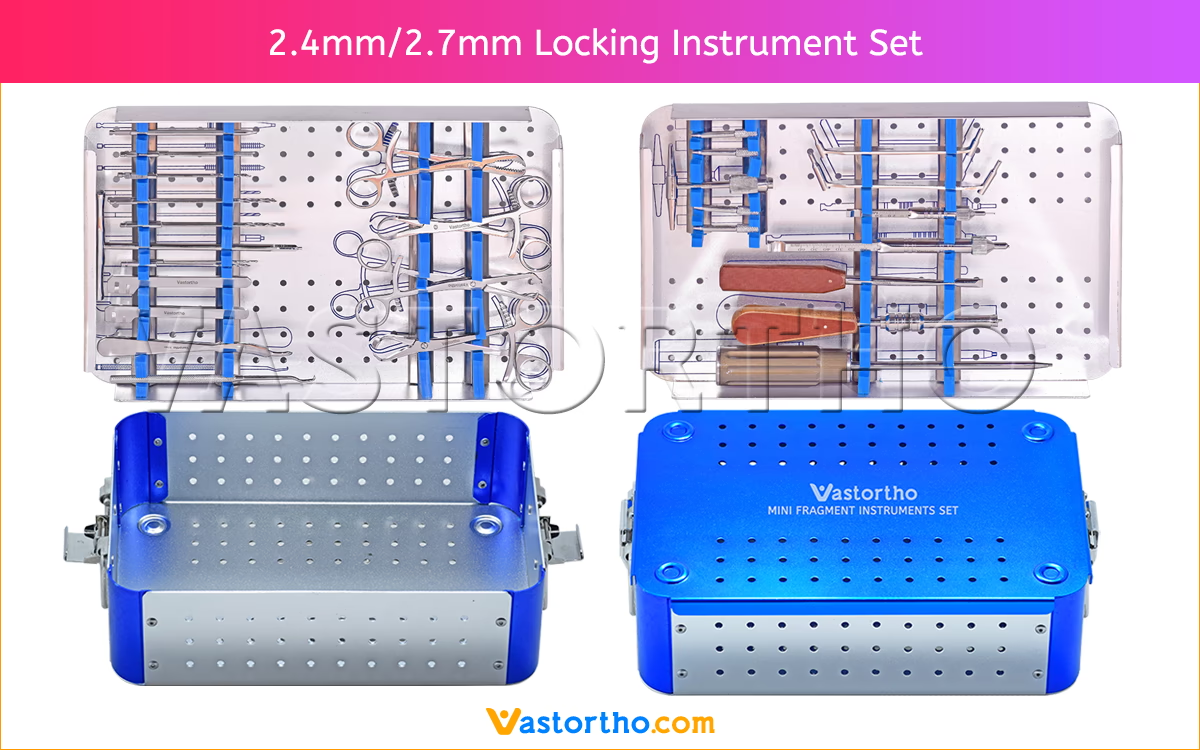
2.4mm/2.7mm Locking Instrument Set in anodized orthopedic small bone trauma instrument tray

2.4mm/2.7mm Locking Instrument Set

October 17, 2026/by VastOrtho
Anterior Cervical Plate Instruments Set

Anterior Cervical Plate Instrument Set

May 23, 2026/by VastOrtho
Spine Cervical Cage Instruments Set

Cervical Cage Instrument Set

May 12, 2026/by VastOrtho
Complete 3.5mm Small Fragment Locking Instrument Set in an anodized small fragment trauma instrument tray

3.5mm Small Fragment Locking Instrument Set

February 1, 2021/by VastOrtho
Complete 4.5mm/5mm Large Fragment Locking Instrument Set in an anodized large fragment trauma instrument tray

4.5mm/5mm Large Fragment Locking Instrument Set

January 30, 2021/by VastOrtho
Complete Dynamic Hip Screw Instrument Set in an anodized sterilization tray

Dynamic Hip Screw Instrument Set

January 27, 2021/by VastOrtho
Complete Tibial Nail Instrument Set organized in an anodized orthopedic tibial nail instrument tray

Tibial Nail Instrument Set

January 26, 2021/by VastOrtho
expert tibial nail instrument set hero

Expert Tibial Nail Instrument Set

January 25, 2021/by VastOrtho
Femur Nail Instruments Set

Femur Nail Instruments Set

January 25, 2021/by VastOrtho
PFN Nail Instruments Set

PFN Nail Instruments Set

January 24, 2021/by VastOrtho
PFNA2 Instruments Set

PFNA2 Instruments Set

January 23, 2021/by VastOrtho
PFNA Instruments Set

PFNA Instruments Set

January 22, 2021/by VastOrtho
Gamma Nail Instruments Set

Gamma Nail Instruments Set

January 21, 2021/by VastOrtho
Humeral Humerus Nail Instruments Set

Humeral (Humerus) Nail Instruments Set

January 20, 2021/by VastOrtho
Titanium Elastic Nail Instruments Set

Titanium Elastic Nail Instruments Set

January 18, 2021/by VastOrtho
TENS Nail Instruments Set

TENS Nail Instruments Set

January 17, 2021/by VastOrtho
Kuntscher Nail Instruments Set

Kuntscher Nail (K Nail) Instruments Set

January 16, 2021/by VastOrtho
Herbert Screws Instruments Set

Herbert Screws Instruments Set

January 13, 2021/by VastOrtho
Headless Screws Instruments Set

Headless Screws Instruments Set

January 13, 2021/by VastOrtho
4 mm Cannulated Cancellous Screws Instruments Set

4 mm Cannulated Screws Instruments Set

January 13, 2021/by VastOrtho
6.5 mm Cannulated Cancellous Screws Instruments Set

6.5mm Cannulated Screws Instruments Set

January 12, 2021/by VastOrtho
Spine Instruments Set

Spine Instruments Set

January 11, 2021/by VastOrtho
Pedicle Screws Instruments Set

Pedicle Screws Instruments Set

January 10, 2021/by VastOrtho
Laminectomy Instruments Set

Laminectomy instruments set

January 5, 2021/by VastOrtho
Bipolar Instruments Set

Bipolar Instruments Set

January 4, 2021/by VastOrtho
Angle Blade Plate Instruments Set

Angle Blade Plate Instruments Set

January 3, 2021/by VastOrtho
Austin Moore Instruments Set

Austin Moore Instruments Set

January 2, 2021/by VastOrtho
Broken Screw Removal Instruments Set

Broken Screw Removal Set

January 1, 2021/by VastOrtho
Femoral Nail Instruments Set

Femoral Nail Instruments Set

January 9, 2019/by VastOrtho
PFNA II Instruments Set

PFNA-II Instruments Set

January 8, 2019/by VastOrtho
Polyaxial Screws Instruments Set

Polyaxial Screws Instruments Set

January 7, 2019/by VastOrtho

CLINICAL SAFETY & OPERATIONAL PROTOCOL: EXPERT TIBIAL NAIL INSTRUMENT SET

Safety, Handling, Cleaning & Sterilization Guide for the Expert Tibia Nail ((ETN)) Instrument System and Multi-Directional Locking Tibial Nail Instrument Set

SECTION 01 | PURPOSE, SCOPE & TRAINING REQUIREMENTS

1.1 Why This Protocol Exists

This easy-to-understand Clinical Safety & Operational Protocol establishes mandatory, evidence-based rules for checking, preparing, using, cleaning, sterilizing, and tracking reusable orthopedic instruments and trauma implants. Following these safety steps when operating with the Expert Tibial Nail Instrument Set prevents avoidable surgical harms, including accidental bone fractures, heat death of bone cells (thermal osteonecrosis), broken metal pieces left inside the patient, stripped screw heads, cross-infection, galvanic corrosion, and early metal fatigue.

1.2 Scope of Instruments & Implants Covered

This protocol applies to all reusable manual, modular, hollow (cannulated), impact-driven, and power-assisted tools across the Expert Tibial Nail Instrument Set, the Expert Tibia Nail ((ETN)) Instrument System (also referred to as the Expert Tibia Nail (ETN) Instrument System), and the Multi-Directional Locking Tibial Nail Instrument Set:

  • Cutting, Reaming & Bone Prep Tools: Intramedullary (IM) flexible and rigid reamers, bone awls, drills, taps, osteotomes, chisels, gouges, rasps, broaches, and oscillating saw blades.
  • Hollow (Cannulated) & Guided Trajectory Tools: Cannulated drills, guide wires (Kirschner wires and Steinmann pins), trocars, depth gauges, and radiolucent carbon-fiber targeting frames.
  • Torque-Limiting & Ratcheting Mechanisms: Calibrated torque-limiting drivers (solid-state and spring-clutch designs), ratcheting handles, and screw reduction towers.
  • Impaction, Extraction & Trialing Devices: Slap hammers, bone tamps, tibial impactors, and modular polymer or metallic trial components.
  • Osteosynthesis & Trauma Fixation Implants: Intramedullary (IM) nails, interlocking bolts, cortical, cancellous, and cannulated bone screws, Kirschner wires, and cerclage cables supplied in sterile packs or sterilization caddies.

1.3 Load-Sharing Principles & Staff Qualifications

Trauma fixation implants are engineered as temporary load-sharing devices intended to stabilize fractures only until biological bony union occurs (typically 8 to 24 weeks). If bone healing is delayed or non-union occurs, persistent cyclic loading will eventually cause fatigue breakage of any metallic nail, bolt, plate, or screw. Surgical instrumentation must be handled exclusively by licensed orthopedic surgeons, credentialed operating room (OR) staff, and certified Central Sterile Services Department (CSSD/SPD) personnel who have completed documented training on system assembly, torque calibration limits, and validated reprocessing parameters.

SECTION 02 | CRITICAL WARNINGS, CONTRAINDICATIONS & MATERIAL CARE

CRITICAL CLINICAL WARNINGS — PATIENT SAFETY MANDATES

  • Never use dull reamers, drills, or taps: Using cutting, drilling, or reaming tools beyond their validated sharpness lifecycle requires excessive axial force and heats bone above 47°C (116.6°F), causing irreversible thermal osteonecrosis and subsequent aseptic implant loosening.
  • Never pry or bend with instruments: Hollow drills, taps, osteotomes, and guide wires in the Expert Tibia Nail ((ETN)) Instrument System are engineered strictly for straight-in-line (coaxial) load transmission. Off-axis bending or prying induces brittle fracture and leaves retained intra-osseous metallic fragments.
  • Never mix brands or dissimilar metals: Never mix tools or implants from different manufacturers, as dimensional micro-variances cause cold-welding, screw head stripping, and cam-out. Never combine Stainless Steel screws or bolts with Titanium nails or plates, as direct contact in body fluids creates battery-like galvanic corrosion.
  • Strict single-use & zero-scratch rules: Never reprocess single-use devices like K-wires, disposable saw blades, or single-use torque limiters marked “Do Not Reuse”. Orthopedic implants are strictly single-use only; an implant that has contacted blood, bone, or tissue must never be re-sterilized or placed back into an implant caddy. Never grasp permanent implants with toothed forceps, as a single microscopic surface scratch on a titanium or cobalt-chrome implant creates a stress concentrator that reduces fatigue strength by more than 50%.

2.1 When NOT to Use Tools or Implants

Damaged or Uncalibrated Tools: Do not use any tool from the Expert Tibial Nail Instrument Set showing visible corrosion, pitting, micro-fissures, a bent shaft, mushroomed impaction strike plates, burred cutting edges, faded millimeter lines, or expired torque calibration. Instruments used on patients with confirmed or suspected prion exposure (TSE / CJD) must immediately be quarantined and destroyed by incineration unless national health authorities mandate specific WHO prion-inactivation protocols.

Patient Contraindications: Implantation of permanent internal hardware is strictly contraindicated in the presence of active local or systemic infection (osteomyelitis, septic arthritis, or bacteremia), confirmed severe hypersensitivity to Nickel, Cobalt, or Chromium, insufficient bone stock or severe osteoporosis without supplemental bone grafting or PMMA cement augmentation, or across open epiphyseal growth plates in pediatric patients.

SECTION 03 | PRE-SURGERY CHECKS, TORQUE CALIBRATION & CADDY RULES

3.1 Instrument Inspection

Every tool in the Multi-Directional Locking Tibial Nail Instrument Set must be inspected by the Scrub Technologist on the OR back table before skin incision

3.2 Pre-Op Implant Verification

Verify 24 hours prior to surgery that the primary implant size, at least one size smaller (-1) and one size larger (+1), left/right anatomical variants, and revision/bailout components are physically present, sterile, and within their expiration date. Prior to opening the peel-pouch, the Circulating Nurse, Scrub Technologist, and Operating Surgeon must verbally confirm anatomical side and size match, expiration date, sterile barrier integrity, chemical indicator color shift, and that the package was never dropped. Keep screw and bolt caddies on a clean back-table zone separated from blood-soiled instruments, transfer screws with clean holding forceps, and place any screw that touches blood or bone into a designated “Discard Basin”—never return it to the caddy.

SECTION 04 | SAFE OPERATING ROOM USE & POINT-OF-USE CARE

4.1 Safe Reaming, Targeting, Guide Wire Checks & Broken Tool Steps

  • Coaxial Drilling, Cooling & Guide Wire Tracking: Seat drill sleeves fully into the Multi-Directional Locking Tibial Nail Instrument Set targeting guide before inserting the drill bit and maintain strict coaxial alignment so the drill does not shear metallic shavings into the surgical wound. Continuously irrigate with cooled sterile 0.9% normal saline and employ intermittent advancing (“peck drilling”) every 3–5 seconds to prevent cortical bone temperatures from reaching 47°C. When advancing cannulated reamers or screws over a guide wire, continuously monitor guide wire progression via fluoroscopy and clean the cannulation periodically. If high resistance is encountered, stop immediately so a kinked guide wire is not inadvertently sheared or driven across the cortex. Strip outer surgical gloves and don fresh sterile gloves prior to handling permanent implants, isolate skin edges with iodophor adhesive drapes or fresh sponges, and never submerge permanent implants in open saline bowls.
  • If a Tool Breaks During Surgery: (1) Immediately cease drilling or impaction and reconstruct all visible fragments on the back table; (2) Obtain orthogonal (AP and Lateral) C-arm fluoroscopic views to locate the retained fragment relative to neurovascular structures and joint surfaces; (3) Weigh the morbidity of surgical extraction against leaving a deeply embedded intra-osseous fragment in situ (if left in situ, document exact anatomical coordinates and alloy composition for future MRI compatibility verification and inform the patient postoperatively).

4.2 Immediate OR Wipe-Down (Within 15–30 Minutes)

Blood, bone marrow, synovial fluid, and bone cement begin coagulating on stainless steel within 15 minutes, initiating chloride-induced pitting corrosion. The Scrub Technologist must wipe gross blood and bone debris from instruments immediately after use with sterile sponges moistened solely with sterile water (never use 0.9% normal saline, which causes rapid chloride pitting). Flush all cannulated instruments and suction lumens immediately with sterile water using a pressurized syringe to prevent coagulated marrow plugs, and spray the open tray with an approved pH-neutral enzymatic foam/gel or cover with a wet sterile-water towel before transport.

SECTION 05 | CSSD CLEANING, STERILIZATION, STORAGE & TRACEABILITY

5.1 Manual, Ultrasonic & Automated Washing

In CSSD, staff wearing full PPE must disassemble multi-part tools (depth gauges, slap hammers, modular reamer heads, and ratcheting handles) from the Expert Tibial Nail Instrument Set and the Expert Tibia Nail ((ETN)) Instrument System into their smallest components. Soak for 10–15 minutes in warm (30°C–40°C / 86°F–104°F) pH-neutral enzymatic detergent (pH 6.0–8.5) and brush all serrations, hinges, and cutting flutes completely submerged underwater using soft medical nylon brushes (never metal wire brushes). Pass a tight channel brush through all cannulations at least 3 times, flush with a water jet at 30 PSI for 30 seconds, and run flexible and cannulated tools in a degassed ultrasonic cleaner at 35–45 kHz for 10 minutes. Load trays into an ISO 15883 washer-disinfector with hinges opened to 90° and lumens connected to irrigation ports for all 5 phases: cold pre-wash (<35°C, 3 min), enzymatic/mild alkaline wash (45°C–55°C, 5–10 min, pH 7.0–10.5), warm DI/RO rinse (40°C–50°C, 2 min), thermal disinfection rinse with critical RO/distilled water (90°C–93°C, 5–10 min, A0 >= 3000), and HEPA hot-air drying (90°C–110°C, 15–20 min). Wash implant caddies strictly in separate implant-only loads free of bone debris

5.2 Lubrication, Steam Autoclaving & Storage

  • Lubrication & 25-Lb Weight Limit: Apply steam-permeable water-soluble “instrument milk” only to moving hinges and ratchets—never use silicone or industrial oil. Place two Type 5 chemical indicators at opposite tray corners and ensure total tray weight does not exceed 25 lbs (11.3 kg).
  • Validated Pre-Vacuum Steam Cycles: Sterilize using Dynamic Air Removal (Pre-Vacuum) steam at 132°C (270°F) for 4 minutes (US standard) or 134°C–137°C (273°F–279°F) for 3 minutes (EU standard) with 30–45 minutes drying (use a 10-minute hold and 45–60 minute dry for heavy loaner sets, or 134°C for 18 minutes for WHO prion cycles). Gravity displacement and “flash” sterilization (IUSS) are strictly prohibited.
  • Cooling & Storage Room Rules: Cool trays of the Multi-Directional Locking Tibial Nail Instrument Set untouched on wire racks for 60–120 minutes in a draft-free zone and completely reprocess any wet pack. Store sterile sets and implants in a locked, positive-pressure room (+2.5 to +5.0 Pa) at 18°C–24°C (64°F–75°F) and 30%–60% humidity with at least 4 air changes per hour, positioned 8–10 inches above the floor and 18 inches below sprinkler heads.

PRODUCTS

CATALOGUE

COMPANY

Vast Ortho Footer Logo white

Orthopedic implants and surgical instruments. Twenty years of manufacturing experience, serving professional buyers in international markets.

© Vast Ortho:
Orthopedic Implants & Surgical Instruments Manufacturer
First Floor, Khasra No. 104/14 | B-Block, Sant Nagar, Burari | Delhi-110084, INDIA